

Does wisdom teeth removal hurt? What to expect before, during and after
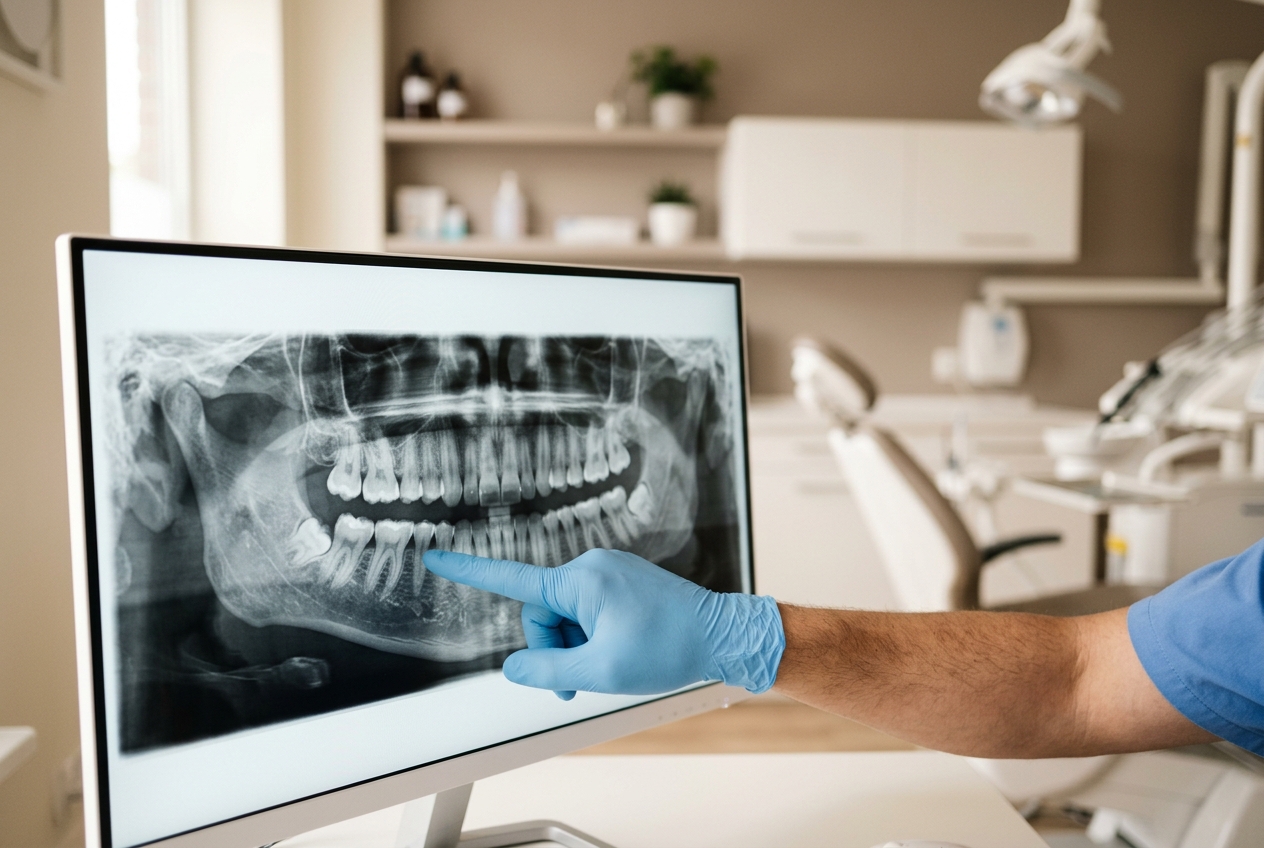
If you've been told your wisdom teeth need to come out, chances are the first thing you did was search “does wisdom teeth removal hurt?” The short answer: the procedure itself shouldn't hurt at all. You'll feel pressure and movement, but not pain. The days after involve some soreness and swelling that's very manageable with the right aftercare. Here's the longer, honest answer.
Why wisdom teeth are removed
Wisdom teeth — your third molars — usually arrive between ages 17 and 25, long after the rest of your teeth have settled in. For many people there simply isn't room. The teeth can come in sideways, only partially break through the gum, or stay trapped (impacted) in the jawbone. That leads to crowding, repeated infections around the gum flap, cavities in the hard-to-clean back corner, and damage to the molar in front.
Not every wisdom tooth needs removal. If yours have erupted fully, are in a good position and you can keep them clean, we'll simply monitor them. We recommend removal when a tooth is causing problems now, or when x-rays make it clear it will.
Simple extraction vs. surgical extraction
A simple extraction is for a tooth that has fully erupted and is visible in the mouth. After numbing the area, we loosen the tooth with gentle, steady pressure and lift it out. It typically takes a few minutes per tooth, and recovery is quick — most people feel close to normal within two or three days.
A surgical extraction is needed when a tooth is impacted, partially erupted, or sitting at an angle below the gumline. A small incision is made in the gum, and sometimes a little bone is removed or the tooth is divided into sections so it can be removed with minimal force. The area is then cleaned and closed with dissolving stitches. Surgical extractions take longer — usually 20 to 45 minutes per tooth — and recovery runs closer to a week.
Both are routine, everyday procedures at Beechwood, and we perform simple and surgical wisdom teeth extractions right here in our Waterloo studio.
Does it hurt during the procedure?
No. Before anything begins, the area is fully numbed with local anaesthetic. We wait until you confirm you can't feel anything sharp before starting. During the extraction you'll notice pressure, pushing and some sounds — that's normal and expected — but you should not feel pain. If you ever do, raise a hand and we'll stop and add more anaesthetic. Nobody is ever rushed through an extraction here.
Nervous? You have options
Being anxious about oral surgery is completely normal. For patients who want more than local anaesthetic alone, we offer sedation options that help you feel calm and relaxed throughout — many people remember very little of the appointment afterwards. Tell us how you're feeling when you book and we'll build a plan around your comfort, including taking breaks whenever you need them.
What recovery actually feels like
Day of surgery: The numbness wears off over two to four hours. You'll bite on gauze for the first hour to let a clot form, then rest. Mild to moderate soreness and a feeling of fullness in the jaw is normal. Take your first dose of pain relief before the anaesthetic fully wears off — staying ahead of discomfort is far easier than catching up.
Days one to three: Swelling peaks around day two or three, then begins to go down. Soreness is usually well controlled with ibuprofen and acetaminophen taken on a schedule; stronger medication is rarely needed. Stick to soft, cool foods — yogurt, smoothies (no straws), mashed potatoes, soup, scrambled eggs.
Days four to seven: Most people are back to work or school and eating more normally. Stitches dissolve on their own. Any lingering tenderness should be steadily improving every day. If pain is getting worse rather than better after day three, call us — it may be a dry socket, which we can treat quickly.
Aftercare that makes the difference
Don't use straws, smoke or spit forcefully for at least 72 hours — the suction can dislodge the clot. Keep your head elevated when resting. Apply a cold pack to your cheek for 20 minutes on, 20 off during the first day to limit swelling. From the day after surgery, rinse gently with warm salt water after meals. Brush your other teeth normally, but stay away from the extraction site for a few days. Skip the gym for two or three days — raised blood pressure can cause bleeding.
Frequently asked questions
- How long does wisdom teeth removal take?
- A simple extraction takes a few minutes per tooth. Surgical removal of impacted teeth takes roughly 20 to 45 minutes each. Plan on about an hour to 90 minutes for the whole appointment if all four are being removed.
- Will I be asleep?
- Most wisdom teeth are removed under local anaesthetic, meaning you’re awake but completely numb. If you prefer, we offer sedation options so you feel relaxed and drowsy throughout. We’ll discuss what suits you at your consultation.
- Can I drive home?
- With local anaesthetic only, yes. If you’ve had sedation, you’ll need someone to drive you home and stay with you for a few hours.
- What is a dry socket?
- A dry socket happens when the blood clot protecting the extraction site is lost too early, exposing bone. It causes a throbbing ache that starts two to four days after surgery. It affects a small percentage of patients and is easily treated with a medicated dressing — just call us.
- Does insurance cover wisdom teeth removal?
- Most dental plans and the Canadian Dental Care Plan cover extractions, including surgical ones. We bill your insurance directly and will give you a clear estimate before your appointment so there are no surprises.
Wondering if your wisdom teeth need to come out?
Book a consultation with Dr. Gabi Micheli. We'll take a panoramic x-ray, show you exactly what's happening, and talk through whether removal makes sense — and how we'll keep you comfortable if it does.